

If you’re planning a kitchen renovation or comparing professional appliances, you may have wondered: do professional chefs prefer gas or induction?
For decades, gas cooking dominated restaurant kitchens and culinary schools. Today, induction technology has entered professional kitchens and high-end homes, changing how chefs think about heat control, efficiency, and safety.
The truth is that both gas and induction can produce exceptional food. The difference lies in how the heat is delivered, how quickly it responds, and how each cooking style fits the way a chef likes to work.
Before choosing between gas or induction, it helps to understand why chefs historically favored gas—and why induction is gaining traction.
Visit the Clarke showroom to experience gas and induction cooking firsthand and see how professional appliances perform in real kitchen environments before making your decision.
Visit Our Boston Showroom | Visit Our Milford Showroom | Visit Our South Norwalk Showroom

Key Summary
- Both gas and induction cooking produce the same end result: excellent food
• Gas ranges provide visible flame and tactile control that many chefs grew up using
• Induction cooktops heat faster and offer extremely precise temperature control
• Many professional kitchens are beginning to incorporate induction alongside gas
• The right choice often depends on cooking style, kitchen design, and personal preference
Why Professional Chefs Traditionally Prefer Gas
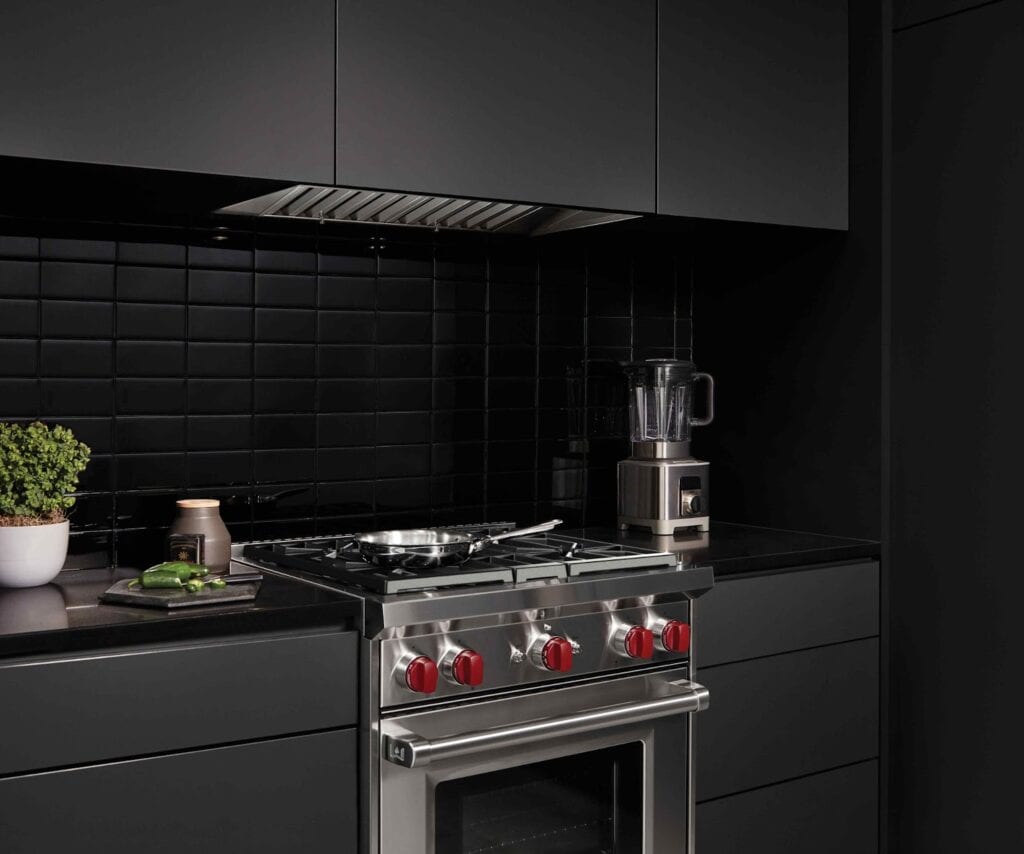
Gas cooking has long been the standard in commercial kitchens. Many professional chefs trained on gas ranges, and that familiarity still influences preferences today.
There are several reasons chefs historically gravitate toward gas.
Instant Visual Control
Gas produces a visible flame. Chefs can see the level of heat immediately and adjust it in real time.
Turning the knob increases or decreases the flame instantly, which makes it easy to control sautéing, searing, and simmering.
Works With Any Cookware
Gas ranges work with nearly any type of cookware. Cast iron, stainless steel, copper, aluminum, and specialty pans all function the same way.
For chefs who rely on a wide range of cookware, that flexibility is valuable.
Flame Cooking Techniques
Certain cooking techniques benefit from open flame. Chefs sometimes char peppers, blister vegetables, or toast tortillas directly over the burner.
Extremely Low Simmer Performance
High-end gas cooking also offers exceptional low-heat control. Some professional gas ranges deliver extremely low simmer settings without cycling heat on and off. Instead, they maintain a steady flame that keeps sauces delicate and stable for long periods of time.
For chefs preparing reductions, sauces, or delicate dishes, that type of simmer control can be important.
Chef Vanessa Ali, Culinary Director, sums it up well: “I trained in kitchens that relied heavily on gas ranges, and there’s something very intuitive about cooking over a flame. You can see the heat and adjust it instantly, which is what many chefs grow up using. At the same time, I’ve really come to appreciate induction for its speed and precision. When you’re working on delicate sauces or trying to control heat very carefully, induction can be incredibly responsive. In my experience, it’s less about one being better than the other and more about using the right tool for the way you like to cook.”
Why More Chefs Are Exploring Induction
While gas has long dominated professional kitchens, induction cooking has made significant advancements in recent years.
Many chefs who try induction for the first time are surprised by how responsive and powerful it feels.
Faster Heating
Induction heats cookware directly using magnetic energy rather than heating the burner surface first.
Because the heat goes straight into the pan, induction cooktops can bring water to a boil significantly faster than traditional gas burners.
For busy kitchens, that speed can be a major advantage.
Extremely Precise Temperature Control
Induction allows extremely precise control of heat levels. Many systems offer incremental power adjustments that allow chefs to dial in specific cooking levels.
For delicate tasks like melting chocolate, holding sauces, or slow simmering, this precision can be very useful.
A Cooler Kitchen Environment
Gas burners release heat into the surrounding air. Induction does not.
Because induction heats the cookware rather than the air around it, kitchens often stay noticeably cooler. This can make a difference during long cooking sessions.
Easier Cleanup
Induction cooktops use a smooth glass surface. As Chef Vanessa notes: “Since the cooktop itself does not generate heat (it warms from the pan instead), spilled food is less likely to burn onto the surface.” For busy kitchens, this makes cleanup significantly easier.
Gas vs Induction: What Many Chefs Actually Use
Interestingly, the debate between gas vs induction is not always about choosing one over the other. Many modern professional kitchens use a combination of both.
Gas may be used for open flame cooking, large stockpots, or high-heat searing. Induction may be used for delicate sauces, precision work, or energy efficiency.
In residential kitchens, the decision often comes down to cooking habits.
Someone who enjoys traditional flame cooking may lean toward gas. Someone who values speed, efficiency, and easy clean upprecision may prefer induction.
Both technologies are capable of delivering restaurant-level results.
How to Decide Between Gas or Induction for Your Kitchen
Choosing between gas or induction should start with how you cook and how you want your kitchen to function.
A few questions can help guide the decision:
- Do you prefer cooking with visible flame or precise digital control?
• Do you frequently cook with cookware that may not be induction compatible?
• Do you value the fastest possible heating performance?
• Is kitchen heat output a concern?
• Are you designing a modern kitchen with energy efficiency in mind?
Experiencing both cooking styles in person often makes the decision clearer. Specifications and online comparisons can explain features, but they do not fully communicate how each technology feels during real cooking.
Experience Gas and Induction Cooking in Person
Choosing between gas and induction is easier when you can see and test both in a real kitchen environment.
Clarke provides opportunities to experience professional-grade cooking appliances in working kitchen displays. Seeing ranges, cooktops, and ventilation systems installed in full kitchen layouts helps homeowners understand how each option performs in practice.
Cooking demonstrations and hands-on experiences allow visitors to compare heat response, control, and workflow before finalizing appliance decisions.
If you are evaluating gas vs induction for a kitchen renovation, visiting Clarke provides the opportunity to see how each cooking technology performs before selecting appliances for your home. This type of hands-on experience can help homeowners feel confident choosing between gas or induction ranges and cooktops that will support the way they cook every day.
Schedule a visit with Clarke to explore gas and induction cooking in person, compare professional appliances, and gain the confidence to choose the right technology for your kitchen renovation.
Frequently Asked Questions
Do professional chefs prefer gas or induction?
Many professional chefs historically preferred gas because it provides visible flame and immediate control. However, many chefs today also use induction because it heats faster and offers extremely precise temperature control. Both gas and induction can produce professional-level cooking results.
Is gas better than induction for cooking?
Gas is not necessarily better than induction for cooking. Gas provides open flame and works with any cookware, while induction heats faster and offers precise temperature control. Both technologies can produce excellent food depending on the cook’s preferences and cooking style.
Do restaurants use induction cooktops?
Yes, some restaurants use induction cooktops. While gas ranges are still common in commercial kitchens, many restaurants are incorporating induction for specific tasks such as sauce preparation, precise simmering, or energy efficiency.
Does induction cook food differently than gas?
Induction does not cook food differently than gas in terms of end results. Both technologies deliver heat to cookware and produce the same cooking outcomes. The difference is how the heat is generated and how quickly it responds.
Is induction safer than gas?
Induction is generally considered safer than gas because the cooktop itself does not produce an open flame. Induction also heats the cookware directly, which reduces excess heat in the kitchen and lowers the risk of accidental burns.
Can you use any cookware on induction?
You cannot use all cookware on induction cooktops. Induction requires magnetic cookware such as cast iron or magnetic stainless steel. Aluminum or copper pans without a magnetic base will not work on induction.
What is the biggest difference between gas vs induction?
The biggest difference between gas vs induction is how heat is generated. Gas uses an open flame to heat cookware, while induction uses magnetic energy to heat the pan directly. This makes induction faster and more energy efficient, while gas provides visible flame and traditional cooking control.