
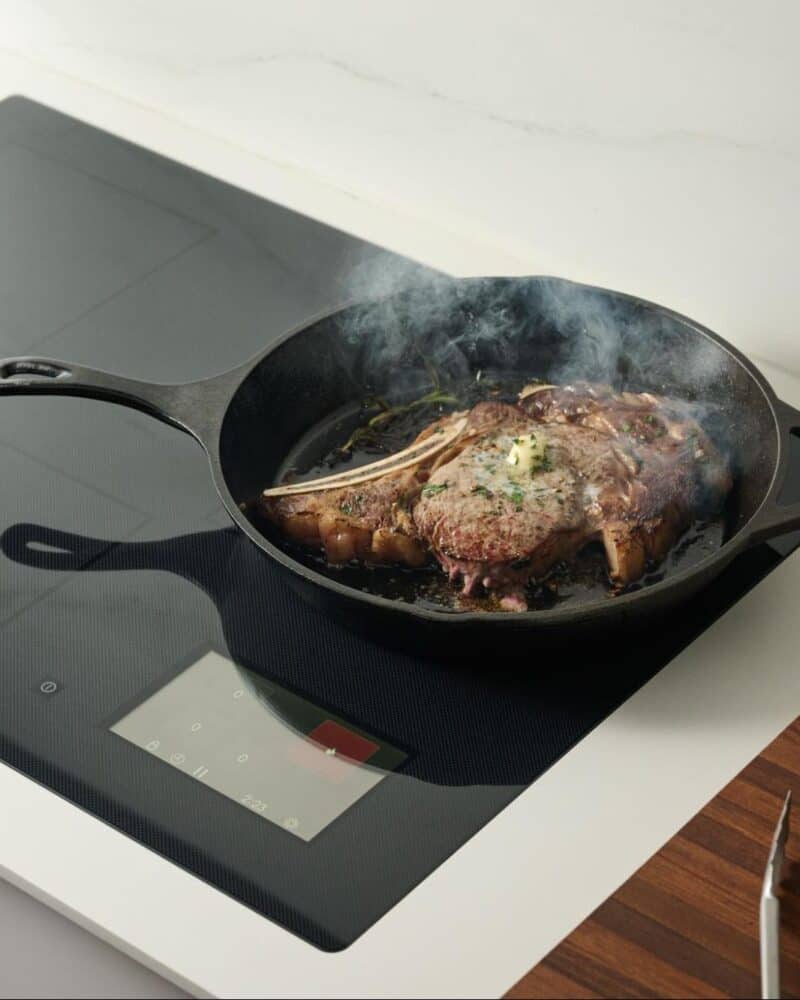
Induction cooking is quickly becoming a favorite in modern kitchens, especially for homeowners who value precision, efficiency, and sleek design. If you are new to induction or considering upgrading your kitchen, understanding how an induction cooktop works, and how to use it properly, will help you get the most out of this advanced technology.

At Clarke, homeowners often ask one simple question before making the switch, how do you actually use an induction cooktop?
Key Takeaways
- Induction cooktops heat cookware directly using magnetic energy, not an open flame or hot surface.
- You must use induction-compatible cookware, which is anything made with magnetic materials.
- Controls are precise and responsive, allowing faster heating and better temperature control.
- Induction cooking is more energy-efficient than gas or traditional electric cooking.
- Cleaning is easier because the cooktop surface stays cooler during use so foods don’t get burned on.
What Is an Induction Cooktop?
An induction cooktop uses electromagnetic technology to heat pots and pans directly. Instead of heating the glass surface and transferring heat to cookware, induction creates a magnetic field that causes the pan itself to heat up.
Because of this, induction cooking feels different at first, but once you understand the basics, it becomes one of the most intuitive and efficient ways to cook.
Want to see some induction cooktops for yourself? Visit one of Clarke’s showrooms across the New England area to see the various models Wolf has to offer. One of our showroom consultants will be more than happy to assist you and answer any questions you may have about the products!
Visit Our Boston Showroom | Visit Our Milford Showroom | Visit Our South Norwalk Showroom
Step 1. Use the Right Cookware
Before turning on your induction cooktop, make sure your cookware is compatible.
Induction cookware requirements include:
- A magnetic base, such as cast iron or magnetic stainless steel
- Flat bottoms that sit flush on the cooktop surface
- Proper sizing that matches the burner zone
A quick test is to place a magnet on the bottom of the pan. If it sticks firmly, it will work on induction.
Non-compatible cookware, such as aluminum, copper, or glass without a magnetic layer, will not heat.
At Clarke, our showroom chefs use Made In Cookware for their durability, consistent heat performance, and compatibility with induction cooking. Their cookware is designed to perform well on precision appliances while holding up to everyday use.
Step 2. Place the Pan on the Cooking Zone
Induction cooktops only activate when cookware is detected. Place your pan centered on the cooking zone before turning the unit on.
If the pan is too small, off-center, or incompatible, the cooktop may not activate or may display an error message.
Step 3. Power On and Select a Heat Level
Once the pan is in place:
- Turn on the cooktop using the power button or touch control.
- Select the burner zone you want to use.
- Adjust the heat level using the slider.
Induction responds almost instantly. Water can boil in a fraction of the time compared to traditional electric cooking or gas burners.
Step 4. Cook with Precision
Induction cooktops excel at controlled cooking. You can quickly move between high heat for searing and low heat for simmering without long delays.
Induction models also include features such as:
- Boost mode for rapid boiling
- Timers for precise cooking
- Automatic pan detection and shutoff
- Child safety locks
Because the surface itself does not get as hot, spills are less likely to burn onto the cooktop.
Step 5. Turn Off and Clean Up
When you are finished cooking, turn off the burner and remove the pan. The cooktop surface cools quickly since it was not the primary heat source.
Cleaning is simple:
- Wipe the surface with a soft cloth once cooled
- Use a non-abrasive cleaner designed for glass cooktops and a microfiber cloth
- Avoid harsh scrubbing pads that could scratch the surface
For more detailed guidance, read our blog on how to clean a Wolf cooktop, which walks through best practices for keeping your surface looking like new.
Common Induction Cooking Tips
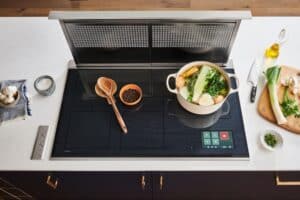
- Start with lower heat settings than you would use on gas, induction is very powerful
- Lift pans instead of sliding them to prevent surface scratches
- Use cookware with smooth, flat bottoms for even heating
- Take advantage of timers and presets for consistent results
Why Homeowners Are Switching to Induction
Induction cooktops are popular in luxury kitchens because they combine performance with safety and design. There is no open flame, less ambient heat in the kitchen, and exceptional control for everything from delicate sauces to high-heat searing.
Homeowners comparing cooking technologies often want a deeper understanding of how induction stacks up against other options. Our guides on induction vs electric cooking and induction vs convection cooking break down the key differences in performance, efficiency, and everyday usability, helping homeowners make a confident decision.
Want to see some induction cooktops for yourself? Visit one of Clarke’s showrooms across the New England area and our team can walk you through available Wolf induction cooktop models, explain the differences between technologies, and help you choose the right option for your kitchen and cooking style.
Visit Our Boston Showroom | Visit Our Milford Showroom | Visit Our South Norwalk Showroom
For questions or private consultations, contact us today.
FAQ. How to Use an Induction Cooktop
How do I know if my cookware works on an induction cooktop?
If a magnet sticks to the bottom of your pan, it is induction compatible. Cast iron and most stainless steel cookware work well.
Does an induction cooktop get hot?
The glass surface will get hot from the heat of the pan, but since the glass isn’t the source of the heat, it won’t get nearly as hot as a traditional electric cooktop. This reduces the risk of burns and makes cleanup easier.
Can I use an induction cooktop like a gas stove?
Yes, but with more precision. Heat changes are instant, similar to gas, but controlled digitally for more accuracy.
Is induction cooking energy efficient?
Yes. Induction cooktops transfer energy directly to cookware, reducing wasted heat and improving overall efficiency.
Why is my induction cooktop not turning on?
Common reasons include incompatible cookware, a pan that is not centered, or a pan that is too small for the burner zone.
Final Thoughts
Learning how to use an induction cooktop is simple once you understand how the technology works. With the right cookware and a few adjustments to your cooking habits, induction offers faster heating, better control, and a cleaner, safer kitchen experience.
If you are exploring induction cooking as part of a kitchen renovation or appliance upgrade, visiting our luxury appliance showroom can help you see and test the difference in person. Clarke specializes in helping homeowners understand how premium kitchen appliances fit into real-world cooking and everyday life.