
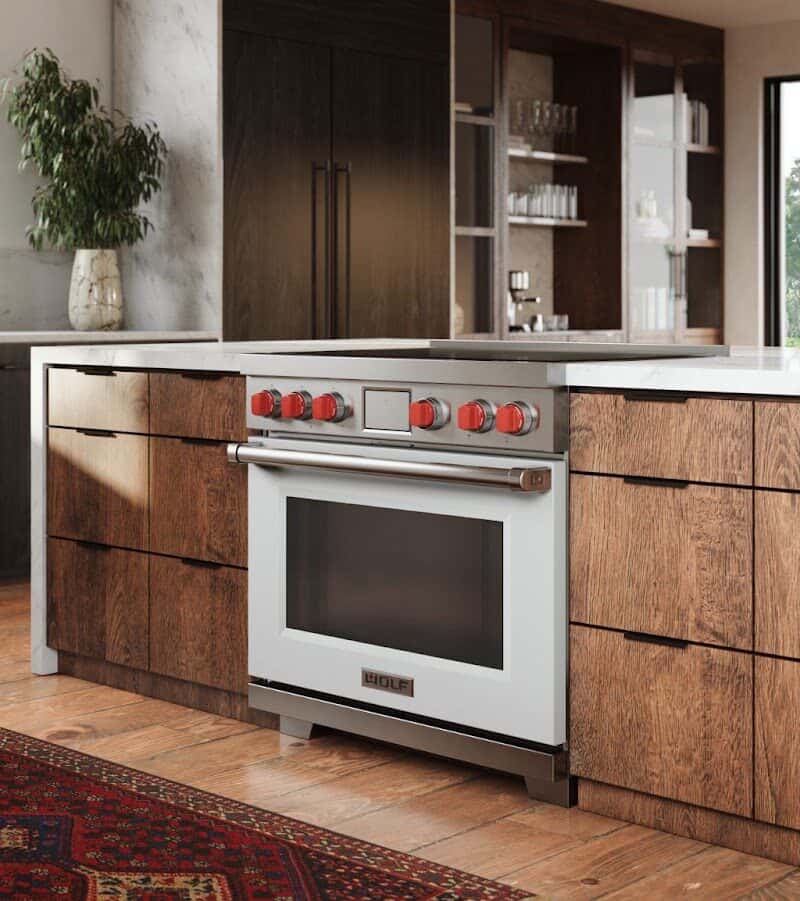
Choosing between a gas vs induction range is one of the most important decisions in a luxury kitchen. Both offer serious performance. Both are used by professional chefs. The right choice depends less on trends and more on how you cook, how your kitchen is designed, and what kind of control you prefer. At Clarke, we help homeowners navigate this decision inside fully built kitchen displays where you can see and experience both options side by side.
When comparing a gas vs induction range, the difference comes down to heat delivery, responsiveness, ventilation, cookware compatibility, and overall kitchen planning. These aren’t details you fully understand from a spec sheet. Seeing how each performs in a real kitchen environment at a Clarke showroom makes the comparison clearer and the final decision more confident.
How Gas and Induction Actually Work
A gas stove uses an open flame to heat cookware. You can see the flame level and adjust it instantly. Heat continues as long as gas is flowing. An induction stove uses electromagnetic energy to heat the cookware directly. The surface itself does not generate heat in the same way gas does. Instead, the pan becomes the heat source. This makes induction highly efficient and responsive.
Heat Control and Responsiveness
In a gas vs induction stove comparison, both offer precise control, but they feel different.
Gas provides visible flame adjustment. Many cooks prefer seeing the flame increase or decrease. Induction responds immediately to touch controls. Because the pan itself is heated directly, changes in temperature happen faster than gas. Water boils quicker. Simmering can be extremely steady.
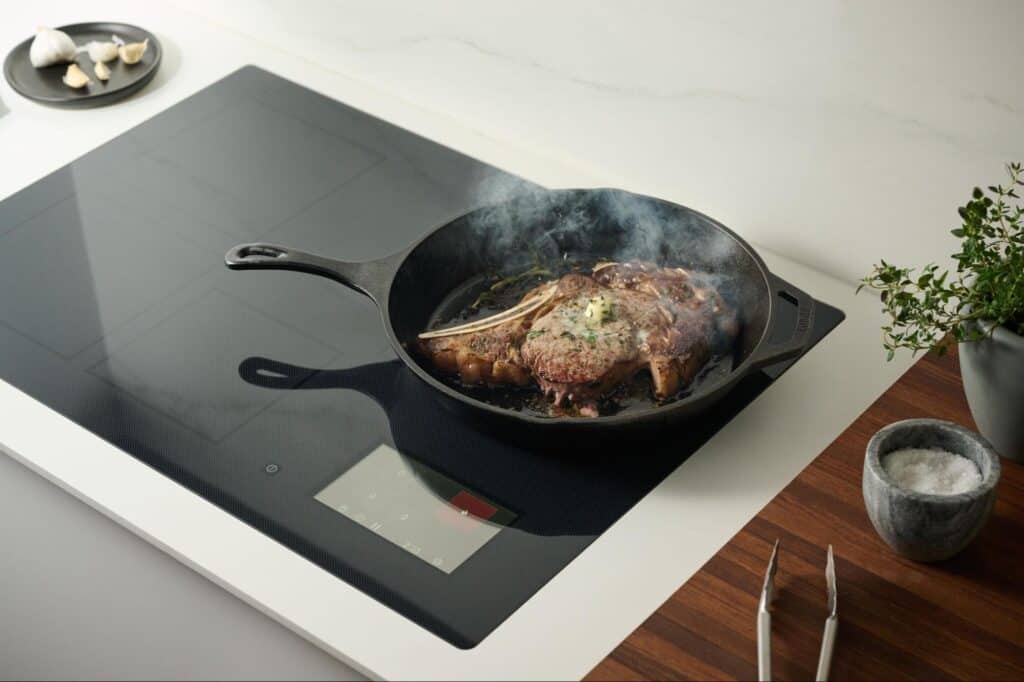
For cooks who want fast response and tight temperature consistency, induction often leads. For cooks who prefer visual control and traditional flame cooking, gas remains appealing.
Speed and Efficiency
Induction is more energy efficient than gas. Less heat escapes into the air, and more energy transfers directly into the cookware.
Gas loses some heat around the sides of the pan, which can make kitchens warmer during heavy cooking. If speed and efficiency are priorities, induction has measurable advantages.
Ventilation and Kitchen Design
Ventilation requirements differ between a gas vs induction range. Gas produces cooking emissions and requires proper ventilation planning.
Induction does not produce open flame, which doesn’t eliminate the need for ventilation, but a less robust system could be sufficient. In tightly designed kitchens or high-performance homes, this difference can influence the final decision. Important note: While you will often be able to use a less powerful motor for induction than for gas, consulting with an HVAC technician is the best way to ensure you are making the right decision for your home, regardless of cooking method
Cookware Compatibility
Gas works with almost any cookware. Induction requires magnetic cookware – meaning that a magnet will stick to the bottom of it. Cast iron and many stainless steel pans are compatible, but aluminum and copper without magnetic bases will not work. Switching to induction may require updating cookware.
Cleaning and Surface Maintenance
Induction cooktops have a smooth glass surface that is easy to wipe clean. Spills are less likely to burn onto the surface because the cooktop itself does not get hot enough to bake food on.Gas cooktops have grates and burner components that require more detailed cleaning. Maintenance preference is often a deciding factor in the gas vs induction stove debate.
Performance in a Full Range Format
When comparing a gas vs. induction range, the oven configuration plays an important role — not just the cooking surface.
A traditional gas range uses gas on the cooktop and in the oven below. A dual fuel range pairs a gas cooktop with an electric oven. Induction ranges combine an induction cooking surface with an electric oven.
It’s worth noting that the electric ovens in dual fuel and induction ranges offer the same core performance benefits: consistent temperatures, strong convection airflow that allows for even results even during multi-rack cooking. Gas ovens, on the other hand, provide familiar operation and the moist heat environment many cooks are used to.
In the end, the right choice depends on how you cook most often — whether you prioritize flame-based stovetop control, electric oven precision, or a combination of both.
Which Is Better: Gas or Induction?
There is no universal answer in a gas vs induction stove comparison. Gas offers tradition, visible control, and broad cookware compatibility. Induction offers speed, efficiency, and precise temperature management.
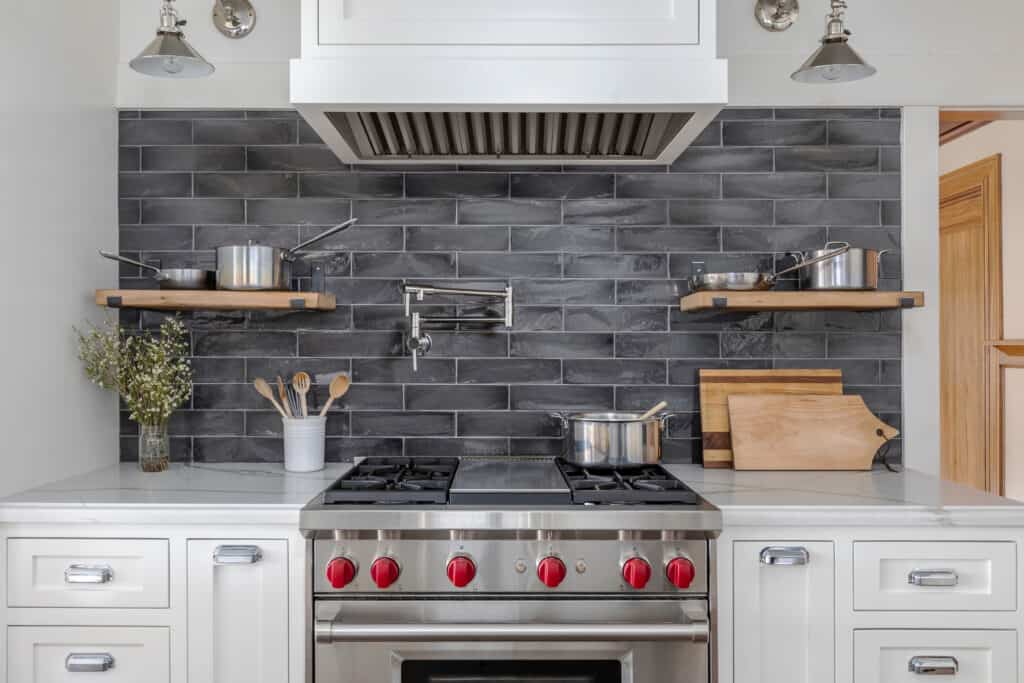
The best option depends on your cooking habits, kitchen layout, ventilation plan, and comfort level with technology. At Clarke, we help homeowners evaluate both options in real kitchen environments so decisions are based on experience rather than assumption.
Still Trying to Decide Between a Gas Vs Induction Range?
Choosing between a gas vs induction stove shouldn’t be a guessing game. It should be a hands-on decision. Our showroom is built for this exact moment in the decision process. Our team will walk you through performance, design integration, and what makes the most sense for the way you cook — so you leave confident, not uncertain.
Want to see some induction ranges for yourself? Visit one of Clarke’s showrooms across the New England area to see the various models Wolf has to offer. One of our showroom consultants will be more than happy to assist you and answer any questions you may have about the products!
Visit Our Boston Showroom | Visit Our Milford Showroom | Visit Our South Norwalk Showroom

Frequently Asked Questions
Does induction cook food differently than gas?
Both induction and gas can deliver excellent results. When used properly, each can produce the same delicious meals, so the difference is less about flavor and more about how the heat is generated and controlled.
Induction heats cookware through magnetic energy, while gas uses an open flame to heat the pan. Induction often delivers fast boil times and very stable temperature control. However, high-performance gas cooking appliances like Wolf also offer exceptional precision, including a true 300 BTU low simmer that holds steady without heat cycling—something many conventional gas ranges cannot achieve.
In the end, the cooking outcome can be the same. The choice typically comes down to how you prefer to control and experience heat in your kitchen.
Is a gas vs induction range more expensive?
Induction ranges are slightly more than a comparable dual fuel range, but efficiency and ventilation differences may influence total investment.
Do professional chefs prefer gas or induction?
Both are used professionally. Preference often depends on training and cooking style rather than performance limitations.
Does induction require special wiring?
Yes. Induction ranges typically require appropriate electrical capacity, which should be evaluated during kitchen planning.
Is induction safer than gas?
Induction eliminates open flame and reduces residual surface heat, which some homeowners view as a safety advantage.