

Adding a dedicated beverage refrigerator to your kitchen is one of those decisions that, once you’ve lived with it, you wonder how you got along without it. But placement matters as much as the unit itself. Put it in the wrong spot and it becomes an obstacle. Put it in the right spot and it quietly transforms how you cook, entertain, and move through your kitchen every day.
These are the placement decisions our consultants at Clarke work through with homeowners most often — along with the spots that sound good on paper but don’t hold up in practice.
The Core Principle: Put It Where the Action Is
Before getting into specific locations, it helps to start with a guiding principle: a beverage refrigerator should be positioned where drinks are actually consumed or served, not where there happened to be extra cabinet space.
That might sound obvious, but it’s the most common placement mistake we see. A beverage refrigerator installed at the back of a U-shaped kitchen, far from where guests gather, becomes just another appliance to navigate around rather than a functional serving station.
Think about where people will naturally congregate in your kitchen — and put the beverage refrigerator there.
Option 1: The Kitchen Island — Usually the Best Choice
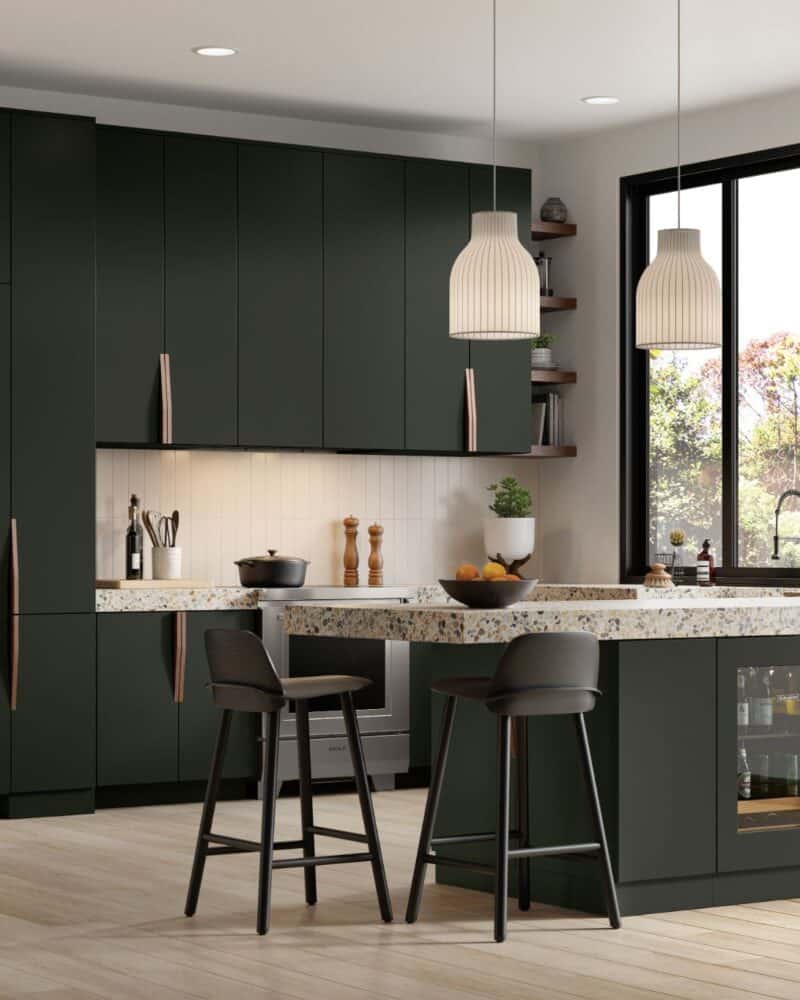
For most kitchens with an island, positioning the beverage refrigerator in the island is the strongest choice. Here’s why it works so well:
- It’s accessible from multiple sides. Guests can reach the island without entering the main cooking zone, which keeps traffic out of the work area while you’re preparing food.
- It creates a natural serving station. The island countertop becomes the staging area for drinks — guests can set down glasses, open bottles, and help themselves without taking over the prep areas along the perimeter.
- It keeps the cooking zone clear. One of the quiet frustrations of entertaining is having guests crowd around the main refrigerator. An island beverage refrigerator solves this completely.
When positioning a beverage refrigerator in an island, place it toward the end of the island closest to the dining or living area — not at the end closest to the range or sink. You want it on the “guest side” of the kitchen, not embedded in the cooking workflow.
A Sub-Zero 24-inch undercounter beverage center is a common choice for island installations. It’s engineered for true undercounter installation with front ventilation, available panel ready so the door matches your cabinetry, and sized to fit a standard 24-inch cabinet opening.
Option 2: At the Transition Point Between Kitchen and Living Area
If your kitchen opens to a living room, family room, or dining area, the transition point between those spaces is an excellent location for a beverage refrigerator. The logic is the same as the island placement: you’re putting drinks where people actually are, not in the middle of the cooking zone.
This works particularly well in open-concept layouts where the kitchen, dining, and living areas share one continuous space. A beverage refrigerator at the far end of the kitchen’s base cabinets — positioned right at the point where the kitchen “ends” — becomes a seamless part of how guests move through the space. They don’t need to enter the kitchen at all.
Option 3: A Dedicated Bar or Butler’s Pantry
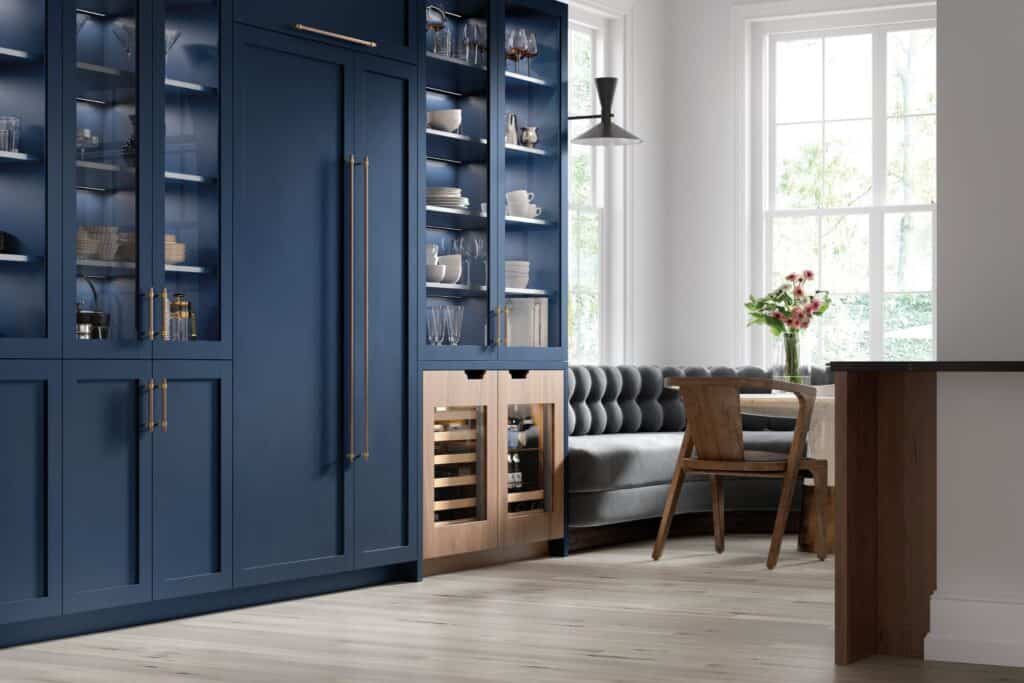
If your home includes a wet bar, or coffee bar this is arguably the ideal location for a beverage refrigerator — because the entire space is designed around drink preparation and serving. There’s no tradeoff between the beverage station and the cooking workflow because they’re physically separated.
In a butler’s pantry, a beverage refrigerator pairs naturally with a small sink, glassware storage, and counter space for opening bottles and pouring. The result is a fully self-contained serving area that operates completely independently of the main kitchen during a gathering.
If you’re planning a butler’s pantry as part of a renovation, this is worth prioritizing. It’s one of the most functional and appreciated additions in luxury home entertaining.
Where Not to Install a Beverage Refrigerator
As important as the good placements are the locations that consistently underperform:
- Next to or between primary cooking appliances. Placing a beverage refrigerator beside the range or between the oven and the refrigerator puts it directly in the cooking zone — exactly where you don’t want guests reaching past you during meal preparation.
- In a high-traffic walkway. The door swing of an undercounter unit is wider than it looks. In a narrow passage, an open beverage refrigerator door creates a real obstacle. Always check the door swing before finalizing placement.
- In an enclosed cabinet without proper ventilation. Built-in undercounter beverage refrigerators vent from the front and are designed for enclosed installation. But the vent must remain unobstructed — cabinet modifications that block the front grille will cause the unit to overheat and fail. This is a common error with aftermarket installation.
- Far from where drinks are actually consumed. A beverage refrigerator installed purely because there was leftover cabinet space in an inconvenient location rarely gets used the way it should. Placement should follow function, not available space.
Practical Considerations Before You Finalize Placement
A few things worth confirming before you commit to a location:
- Electrical: Undercounter refrigerators require a dedicated electrical circuit nearby. Confirm with your electrician that an outlet is accessible at the planned location before cabinets are built or modified.
- Door swing direction: Consider the direction of the hinge before placement.
- Cabinet opening dimensions: A standard undercounter beverage refrigerator requires a 24-inch wide opening. Confirm your opening width, height clearance, and depth against the specification sheet for the specific unit you’re installing.
- Stainless Vs Custom Panel: You can choose from a stainless panel or panel ready as all undercounter units can come in both ways. If the unit will be visible and you want it to match your cabinetry, plan for a panel ready door and coordinate the panel fabrication with your cabinetmaker before installation day.

Thinking Through Your Kitchen Layout?
Undercounter beverage refrigerator placement is one of many decisions that benefit from seeing real examples before finalizing your plan. At Clarke, our showrooms in Boston, Metro West, and South Norwalk display undercounter refrigeration in working kitchen environments so you can see how placement actually functions in context.
Our consultants work through layout questions like this regularly. Schedule a showroom appointment to talk through your specific kitchen and get placement recommendations based on how you actually cook and entertain.
You can also explore the full range of Sub-Zero undercounter refrigeration options — beverage centers, wine storage, refrigerator and freezer drawers — to understand what’s available before you visit.
Frequently Asked Questions
Can an undercounter beverage refrigerator be installed anywhere in the kitchen?
Technically, yes — as long as there’s a suitable cabinet opening and a dedicated electrical circuit nearby. But not every location makes functional sense. The best placements put the beverage refrigerator where guests can access it without entering the cooking zone: in an island, at the transition to a dining or living area, or in a dedicated bar space.
Does it matter which end of the island a beverage refrigerator is placed?
Yes, significantly. Place it at the end of the island closest to the dining or living area — the “guest side.” This allows guests to access drinks naturally without walking into the main cooking area. A beverage refrigerator at the end of the island closest to the range ends up in the middle of the cooking workflow, which defeats the purpose.
How much clearance does an undercounter beverage refrigerator need?
Built-in undercounter units designed for kitchen installation use front ventilation and don’t require side or rear clearance inside the cabinet. However, the front grille must remain unobstructed. Always check the specification sheet for your specific unit — standard openings are typically 24 inches wide, and height and depth dimensions vary by model.
Can a beverage refrigerator be installed outside the kitchen?
Yes. A wet bar, home bar, coffee bar, or even a mudroom are all reasonable locations for a beverage refrigerator. The key requirement is a suitable cabinet opening, front ventilation clearance, and a nearby electrical circuit. Outdoor installation requires a unit specifically rated for outdoor use — standard kitchen models are not weatherproof.
How do I know if I need a beverage refrigerator or a wine refrigerator?
It comes down to what you’re primarily storing. A beverage refrigerator is best for a general mix of drinks — water, soft drinks, beer, white wine for near-term consumption — stored at serving temperature. A dedicated wine refrigerator is designed for wine preservation at around 55°F, with humidity control and vibration dampening for longer-term storage. If wine is a priority, as is wine preservation, exact serving temperatures of specific varieties, then a dedicated wine unit from Sub-Zero will serve it better than a general beverage refrigerator.
What is the best undercounter beverage refrigerator for a luxury kitchen?
The Sub-Zero undercounter beverage center is widely considered the standard in luxury kitchen applications. It’s engineered for true built-in installation, is panel ready, goes as low as 34 degrees which is lower than most on the market, and built with the same exacting standards as Sub-Zero’s full refrigeration lineup. Our consultants can walk you through the specific models and configurations at any of our three showroom locations. Schedule an appointment to see it in person.