
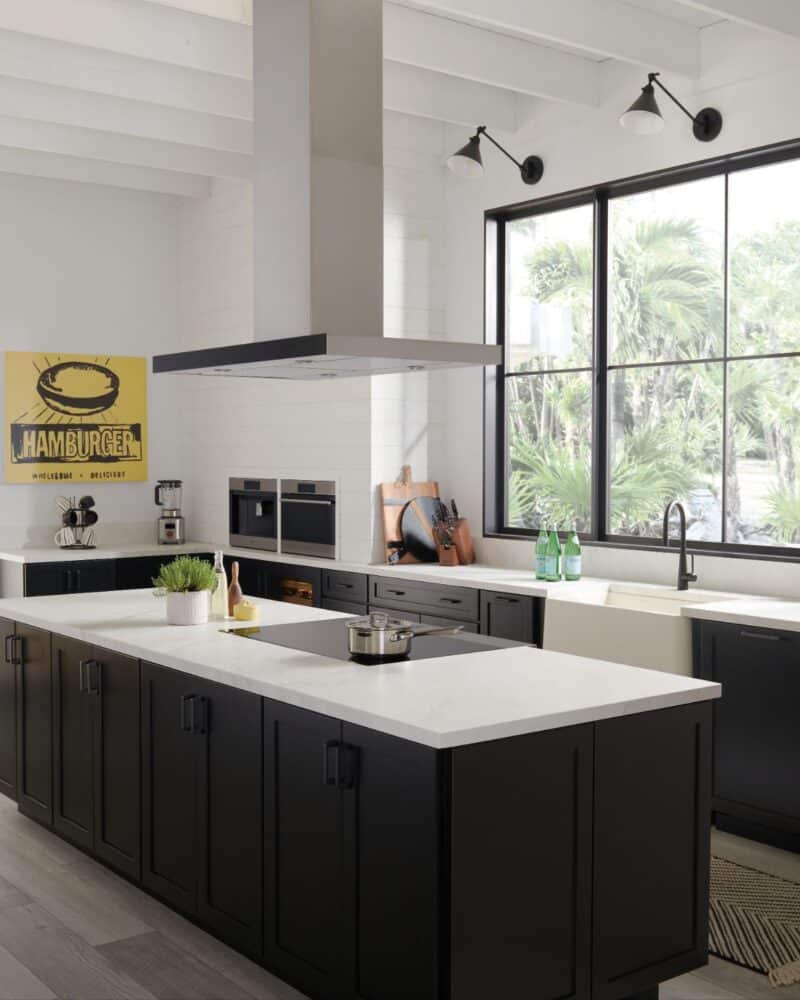

You’ve made the leap to induction — or you’re seriously considering it — and now you’re wondering: do my current pots and pans even work? It’s one of the most common questions our consultants hear at the Clarke showroom, and the answer is simpler than most people expect.
Induction cooking uses magnetic energy to heat cookware directly, which means only certain materials will work. The good news: a lot of what’s already in your kitchen probably qualifies. Here’s what you need to know.

How Induction Cooking Works
Unlike gas or electric cooktops, an induction cooktop doesn’t generate heat itself. Instead, it creates a magnetic field that causes the cookware to heat up directly. The cooktop surface only gets warm because the hot pan is touching it. .
For this to work, the base of your cookware needs to be made from a ferromagnetic material — meaning it must be magnetic. If a magnet sticks to the bottom of your pan, it will work on induction. If it doesn’t stick, it won’t.
This single test is the fastest way to audit your current cookware collection before switching to induction.
Cookware That Works on Induction
Cast Iron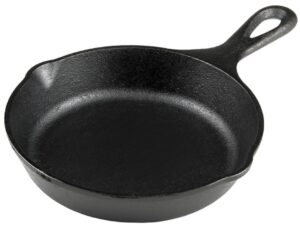
Cast iron is one of the best performers on induction. Its thick, heavy base is highly magnetic and distributes heat evenly and efficiently. Both bare cast iron and enameled cast iron (like Le Creuset or Staub) are fully compatible. If you already own cast iron, you’re in great shape.
Stainless Steel (Magnetic Grade)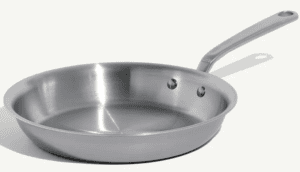
Most stainless steel cookware works on induction, but not all of it. The key is whether the steel is magnetic. Stainless steel made with a higher iron content — typically 18/0 stainless — is magnetic and induction-compatible. Some 18/10 stainless steel is not. Again, the magnet test is your most reliable check. High-quality stainless steel lines from brands like All-Clad, Demeyere, and Made In are specifically engineered for induction and will perform exceptionally well on a Wolf induction cooktop.
Carbon Steel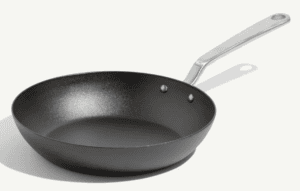
Carbon steel is magnetic and works beautifully on induction. It heats quickly, responds well to temperature changes, and is a favorite among professional cooks. If you’ve been using carbon steel on gas, the transition to induction will be seamless.
Some Nonstick Pans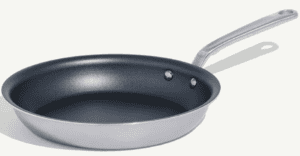
Many nonstick pans are induction-compatible, but it depends on the base material. Nonstick pans with a magnetic stainless steel or cast iron base work fine. Pans with an aluminum base will not, unless the manufacturer has added a magnetic layer to the bottom — which many now do. Check the label or run the magnet test.
Cookware That Does NOT Work on Induction
Pure Aluminum
Aluminum is not magnetic, so standard aluminum pans won’t work on induction. This includes many lightweight skillets and sauté pans that are popular for everyday cooking. However, aluminum pans with a bonded magnetic steel base — labeled “induction-ready” — are the exception.
Copper
Copper cookware is not magnetic and won’t work on induction on its own. Some copper pans have a stainless steel base added specifically for induction compatibility, but traditional copper cookware will not work. If you have a collection of copper pans you love, this is worth factoring into your decision.
Glass and Ceramic
Glass and ceramic cookware — including Pyrex and most baking dishes — are not compatible with induction. These materials are non-magnetic and cannot generate heat through a magnetic field. They’re fine in the oven, but not on an induction cooktop.
How to Test Your Existing Cookware
Before buying anything new, go through your cabinets with a simple refrigerator magnet. Hold it to the bottom of each pan:
- Strong magnetic pull? That pan is induction-compatible.
- Weak or no pull? It likely won’t work, or will perform poorly.
- Labeled “induction ready”? You’re good to go.
Many households find that most of their cookware passes the test — especially if they’ve invested in quality stainless steel or cast iron pieces over the years.
What to Look for When Buying New Induction Cookware

If you’re building a new cookware set to go with a Wolf induction cooktop, here are the key things to look for:
- Flat, smooth base: The bottom of the pan should be perfectly flat to maintain full contact with the induction surface. Warped or uneven bases will heat inconsistently.
- “Induction compatible” or “induction ready” label: Reputable cookware brands will clearly mark compatibility.
- Weight and thickness: Heavier, thicker bases perform better on induction. They heat more evenly and hold temperature well.
- Diameter match: The pan should be close in size to the induction zone. Most induction cooktops can sense undersized pans and compensate, but matching diameter gives you the best results.
Does Induction Cookware Work on Other Cooktops?
Yes. Induction-compatible cookware — cast iron, magnetic stainless, carbon steel — works on gas and electric cooktops too. So if you’re transitioning from gas to induction and want to upgrade your cookware, you’re not locked in. Good induction cookware is simply good cookware, period.
Thinking About Making the Switch?
If you’re weighing induction against gas, our consultants have walked hundreds of homeowners through exactly this decision. The gas vs. induction comparison goes beyond cookware — it touches on performance, installation, and how each style fits the way you actually cook.
The best way to experience the difference between gas and induction firsthand and learn which is right for you is to come see it in person. Schedule a showroom appointment and our team can walk you through a live Wolf induction cooking demonstration — cookware and all.
You can also explore our full range of Wolf appliances or visit one of our three showroom locations in Boston, Metro West, or South Norwalk.
Frequently Asked Questions
How do I know if my cookware works on induction?
Hold a refrigerator magnet to the bottom of the pan. If there’s a strong magnetic pull, the cookware is induction-compatible. If the magnet doesn’t stick, the pan won’t work on induction. Many cookware pieces are also labeled “induction ready” or “induction compatible” on the base or packaging.
Will all my existing pots and pans need to be replaced when switching to induction?
Not necessarily. Cast iron, most stainless steel, and carbon steel cookware are typically induction-compatible and will work just fine. Run the magnet test on each piece you own before assuming you need to replace anything. Many homeowners find that most of their existing collection qualifies.
Can I use an aluminum pan on an induction cooktop?
Pure aluminum is not magnetic and won’t work on induction. However, many modern aluminum pans are manufactured with a bonded magnetic steel base specifically for induction compatibility. Check the label — if it says “induction ready,” the pan has been engineered to work despite the aluminum construction.
Does the size of the pan matter on an induction cooktop?
Yes, to a degree. The pan should be reasonably close in diameter to the induction cooking zone for the best results. Most induction cooktops can sense when a pan is undersized and adjust accordingly, but using a pan that’s significantly smaller than the zone can result in less efficient heating. Oversized pans are generally fine.
Is induction cookware different from regular cookware?
Not in any fundamental way. “Induction cookware” simply means cookware with a magnetic base — which includes most cast iron, carbon steel, and magnetic stainless steel. High-quality cookware from reputable brands is almost always induction-compatible. What matters is the base material, not any special coating or feature.
Can I see induction cooking demonstrated before I decide?
Yes. Clarke’s showrooms in Boston, Metro West, and South Norwalk are working kitchens with live Wolf induction cooktops. Schedule an appointment and our consultants can walk you through a hands-on demonstration.